
Comprehensive iHuman Case Study 25-Year-Old Patient with Loose Stool - Week #7 Detailed Report & Analysis | 25-Year-Old Patient with Loose Stools
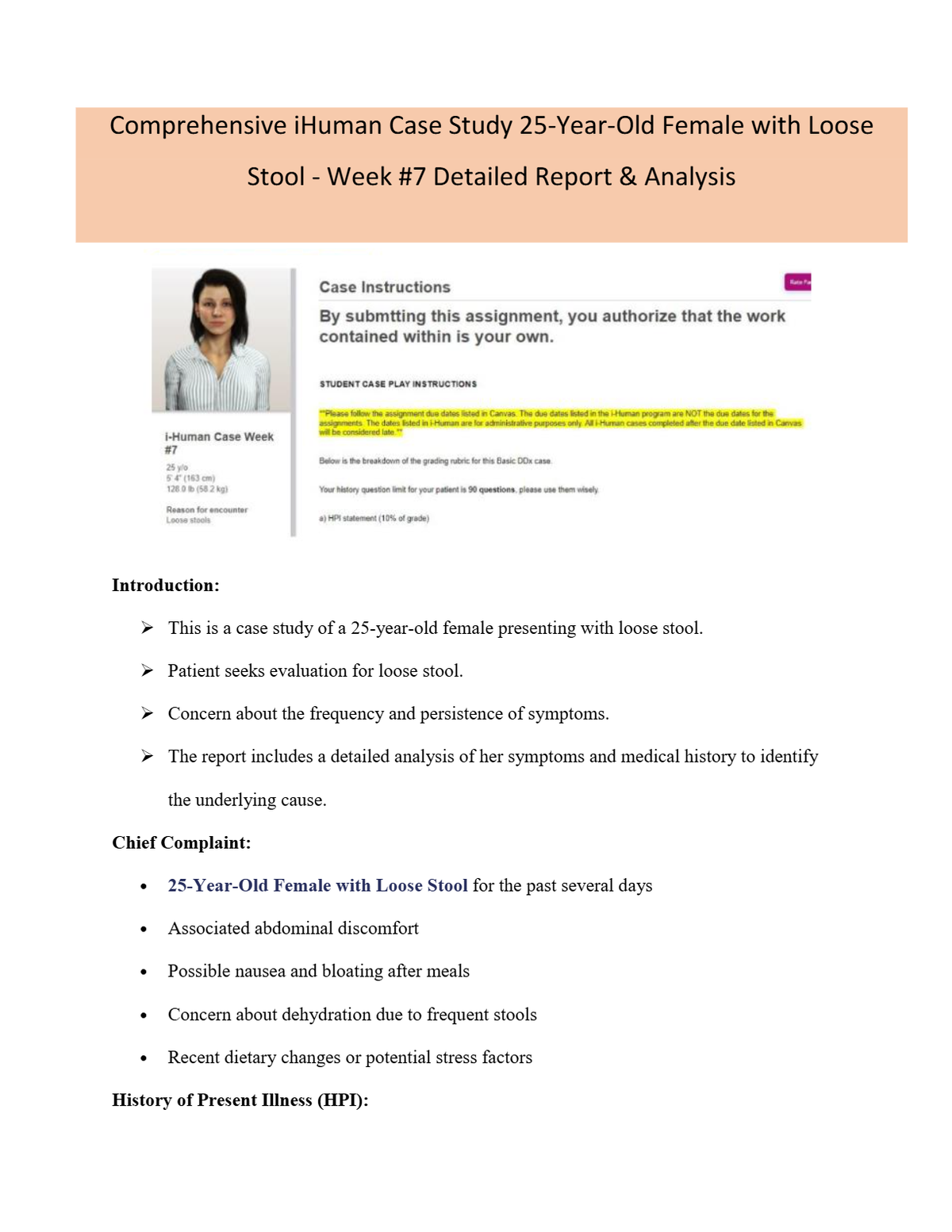
In the 2026 iHuman case study for Week #7, the 25-year-old patient typically presents with acute-onset loose stools. The primary clinical focus is differentiating between self-limiting conditions and those requiring specific intervention.
Case Overview (SOAP Analysis)
- Subjective (History):
- Chief Complaint: Frequent loose bowel movements for 3–4 days.
- Stool Characteristics: Watery or soft, brown, occurring 3–8 times daily. No blood or mucus is typically reported.
- Key Triggers/History: Recent travel (e.g., Mexico), consumption of street food, or high work-related stress.
- Objective (Physical Examination):
- Vitals: May show mild fever or tachycardia if dehydrated.
- Physical Findings: Dry mucous membranes or reduced skin turgor indicate dehydration. Abdominal exam often reveals diffuse tenderness without guarding.
- Assessment (Differential Diagnosis):
- Acute Infectious Gastroenteritis: Highly likely due to sudden onset and possible dietary exposure (e.g., travel or undercooked meat).
- Lactose Intolerance: Possible if symptoms worsen after dairy intake.
- Irritable Bowel Syndrome (IBS-D): Suggested by stress triggers and a family history, though acute symptoms may point elsewhere.
- Inflammatory Bowel Disease (IBD): Less likely if there is no blood, weight loss, or nocturnal symptoms.
- Plan (Management):
- Diagnostics: Stool culture, O&P (ova and parasites), and CBC to rule out infection or anemia.
- Pharmacology: Oral rehydration therapy (ORT) is the priority. Antibiotics (e.g., Ciprofloxacin) may be indicated if a bacterial cause like Traveler's Diarrhea is suspected.
- Non-Pharmacologic: Transition to a bland diet (e.g., BRAT diet) and temporary avoidance of dairy, caffeine, and fatty foods.
Critical Benchmarks for 2026 iHuman Grading
- Dehydration Screening: You must specifically assess and document skin turgor and mucous membrane status to pass the physical exam section.
- Alarm Features: Document the absence of "red flags" such as blood in stool, significant weight loss, or high fever to justify a conservative management plan.
- Diagnostic Stewardship: Avoid ordering excessive imaging (like CT scans) unless alarm features are present, as 2026 rubrics emphasize cost-effective care.