
IHuman Case Study Maria Gonzalez 45 Years Old Female With A History Of Cough Lasting More Than 3 Months
IHuman Case Study Maria Gonzalez 45 Years Old Female With A History Of Cough Lasting More Than 3 Months
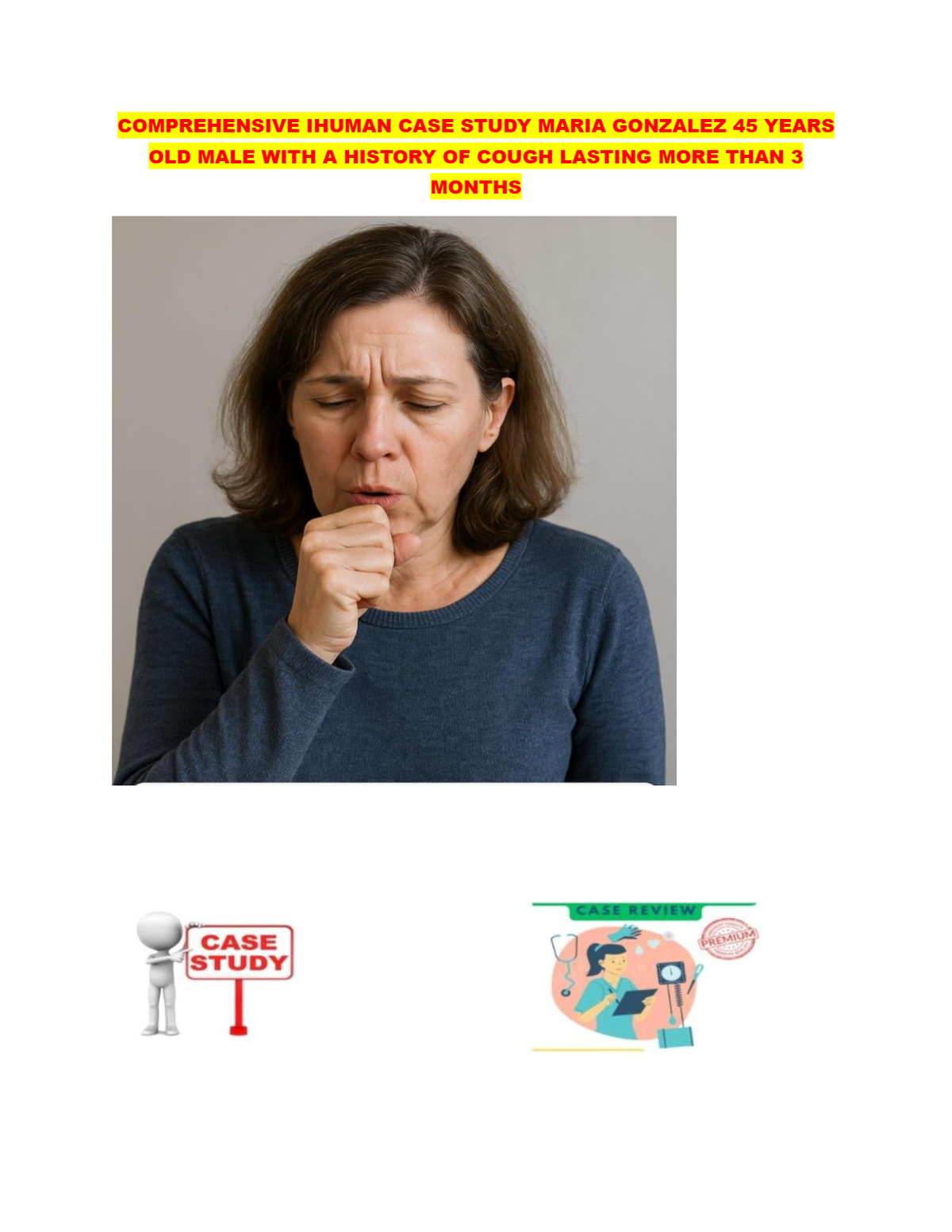
COMPREHENSIVE IHUMAN CASE STUDY MARIA GONZALEZ 45 YEARS OLD MALE WITH A HISTORY OF COUGH LASTING MORE THAN 3 MONTHS
Patient Profile
• Name: Maria Gonzalez
• Age: 45
• Sex: Female
• Occupation: High school teacher
• Ethnicity: Hispanic
Chief Complaint:
"I've had this cough for over three months, and it just won’t go away."
History of Present Illness (HPI):
• When did your cough first start?
• Has it been constant since then, or does it come and go?
• Would you say the cough is getting better, worse, or staying the same?
• Is your cough dry, or are you bringing up mucus?
• What color is the mucus, if any?
• Have you noticed any blood in your sputum?
• Is the cough worse at a particular time of day or night?
• Do you notice it more in certain environments (e.g., outdoors, at work)?
• Does anything trigger the cough (e.g., talking, laughing, cold air)?
• Are you experiencing shortness of breath or wheezing?
• Any chest pain or tightness when you cough?
• Do you have any nasal congestion, sneezing, or postnasal drip?
• Any fevers, chills, or night sweats?
• Have you had any weight loss or fatigue recently?
• Do you smoke or have you ever smoked?
• Do you work in an environment with dust, chemicals, or irritants?
• Have you traveled recently or been exposed to anyone with
tuberculosis?
• Has this cough affected your sleep or daily activities?
• Are you feeling anxious or frustrated about the persistent symptoms?
Maria Gonzalez is a 45-year-old female who presents with a chronic, nonproductive cough that has persisted for approximately 3.5 months. She reports that the cough began gradually and is worse at night and early in the morning. She denies any recent upper respiratory tract infections. The cough is dry, with no associated sputum, hemoptysis, or chest pain.
She reports occasional shortness of breath, especially when climbing stairs, but denies wheezing. No weight loss, fever, or night sweats. She also complains of occasional throat clearing and a sensation of something "dripping down the back of her throat."
Maria Gonzalez is a 45-year-old Hispanic female who presents to the clinic with a persistent dry cough that has been ongoing for approximately 3.5 months. She states that the cough began insidiously and has progressively worsened over time. The cough is non-productive, though she occasionally has to clear her throat. She denies any hemoptysis, chest pain, or purulent sputum. The cough tends to be worse at night and early in the morning, often disrupting her sleep. She also notices increased coughing when speaking for extended periods, laughing, or when exposed to cold air or strong perfumes.
She reports associated intermittent shortness of breath, especially when climbing stairs or walking uphill. She denies any audible wheezing but occasionally feels “tight” in her chest. She denies recent fevers, chills, weight loss, or night sweats.
She does not feel fatigued overall, but the lack of sleep due to nocturnal coughing has been affecting her concentration at work.
Maria describes a sensation of postnasal drip, with frequent throat clearing and a “tickle” in the back of her throat. She also endorses occasional heartburn and a sour taste in her mouth, particularly after heavy meals or when lying down. She notes that these symptoms have been present intermittently for the past few years but have worsened recently. She is not consistent with her prescribed omeprazole and often self-medicates with antacids.
She denies any recent upper respiratory infections, sick contacts, or travel. She has never smoked, and there is no known occupational exposure to dust or chemicals. No pets at home. She works as a high school teacher and reports that the dry classroom environment sometimes makes her symptoms worse.
She has tried over-the-counter antihistamines and cough syrups, but they have not provided significant relief. She has not used any inhalers or prescription cough suppressants.
She is concerned about the duration of the cough, as this is the longest it has ever lasted, and she is beginning to worry about something more serious like “a lung problem or cancer.”
PAST MEDICAL HISTORY (PMH)
• GERD (diagnosed 3 years ago, intermittently treated)
• Allergic rhinitis (seasonal, worse in spring)
• No history of asthma or COPD
Medications
• Omeprazole 20 mg daily (inconsistent use)
• Loratadine PRN
Family History
• Mother: Asthma
• Father: Hypertension
• No family history of TB, cancer, or chronic lung disease