
My Daughter Doesn’t Interact with Other Children and Prefers to Play Alone. IHUMAN CASE ANALYSIS WALDEN UNIVERSITY: WEEK #7 Comprehensive Exam Submission.
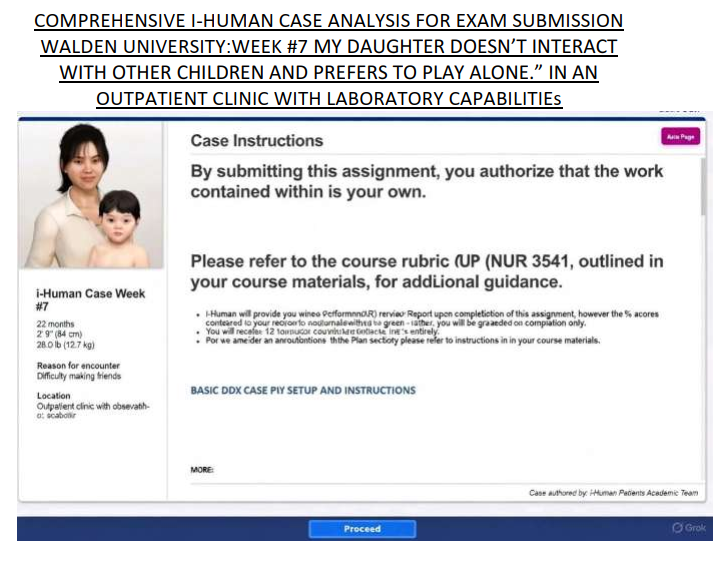
My daughter doesn’t interact with other children and prefers to play alone.
Clinical Setting:
Outpatient Pediatric Clinic with Laboratory Capabilities
1. Identifying Data
Patient: Pediatric female (school-aged child)
Source of History: Mother (reliable historian)
Visit Type: Initial outpatient evaluation
Referral Reason: Concerns regarding social interaction and peer relationships
2. History of Present Illness (HPI)
The patient is a school-aged female brought to the outpatient clinic by her mother due to
concerns about limited social interaction. According to the mother, the child prefers solitary
play and avoids engaging with peers at school and in social environments such as playgrounds
and family gatherings. The behavior has been noticeable for over one year and has remained
consistent.
The mother reports that the child:
Rarely initiates interaction with peers
Appears content playing alone
Becomes anxious or withdrawn in group settings
There are no reports of aggressive behavior, regression in milestones, hallucinations, or mood
swings. No recent illnesses, trauma, or major life stressors were identified.
3. Past Medical History
Prenatal/Birth History: Full-term vaginal delivery, no complications
Developmental History: Met early motor milestones appropriately; language development
slightly delayed per parental report
Medical Conditions: None reported
Hospitalizations/Surgeries: None
Immunizations: Up to date
4. Family History
No known genetic disorders
No family history of autism spectrum disorder
No psychiatric illnesses reported in immediate family
5. Social History
Lives with parents in a stable home environment
Attends school regularly
Limited peer relationships
Screen time within recommended limits
No exposure to tobacco, alcohol, or drugs
6. Review of Systems (ROS)
General: No weight loss, fever, or fatigue
Neurological: No seizures, headaches, or motor deficits
Psychiatric: Social withdrawal, limited peer interaction; no self-harm behaviors
Speech/Language: Occasional difficulty maintaining reciprocal conversation
All other systems reviewed and negative.
7. Physical Examination
General Appearance: Well-nourished, appropriately dressed, cooperative
Vital Signs: Within normal limits for age
HEENT: Normal
Cardiovascular: Regular rate and rhythm, no murmurs
Respiratory: Clear to auscultation bilaterally
Neurological: Alert, oriented, normal tone and reflexes
Psychiatric Observation: Limited eye contact, minimal verbal responses, prefers solitary activity
during visit
8. Mental Status Examination (MSE)
Appearance: Clean, age-appropriate
Behavior: Calm, withdrawn
Speech: Low volume, limited spontanei