
Plant Strategies: The Demographic Consequences of Functional Traits in Changing Environments by Daniel C. Laughlin
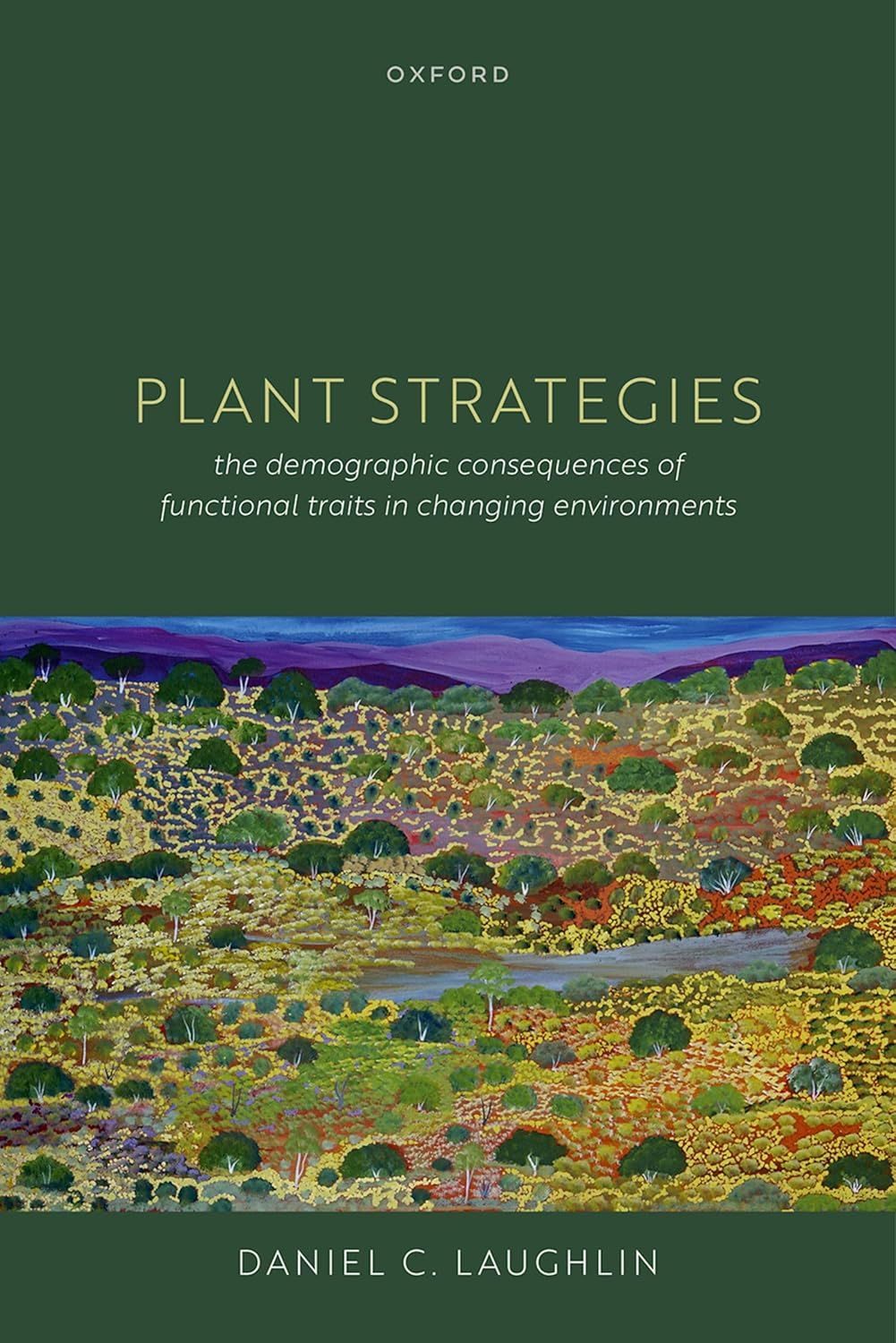
Plant Strategies: The Demographic Consequences of Functional Traits in Changing Environments, by Daniel C. Laughlin, is a 2023 book synthesizing plant ecology by linking functional traits (like leaf size, seed mass) to demography (survival, growth, reproduction) to predict plant responses to environmental change, offering a unified framework using R code, data, and a trait-based approach for understanding vital rates and life-history strategies.
Key Concepts:
- Functional Traits: Heritable characteristics (morphology, physiology, phenology) that influence how plants live and interact with their environment.
- Demography: The study of vital rates (birth, death, growth) that determine population dynamics.
- Trait-Based Framework: Links specific traits to demographic outcomes, explaining plant strategies (e.g., "gamblers" vs. "strugglers").
- Predictive Ecology: Uses traits to forecast how plants will adapt to changing conditions like climate variability and disturbances.
What the Book Offers:
- Synthesis: Integrates functional ecology and demography.
- Methodology: Explains how to quantify traits and test for strategies, including R code for analysis.
- Holistic View: Examines traits from a whole-plant perspective, showing their implications for life-history.
- Insightful Analysis: Discusses tradeoffs in strategies, vital rates, and fitness.
Why It's Important:
- Provides a robust framework for understanding plant adaptation.
- Essential reading for plant ecologists, offering profound insights into plant adaptation.
- Helps navigate complex aspects of modern plant ecology.
Author:
- Daniel C. Laughlin is an Associate Professor at the University of Wyoming, specializing in quantitative approaches to global change in plant ecology.