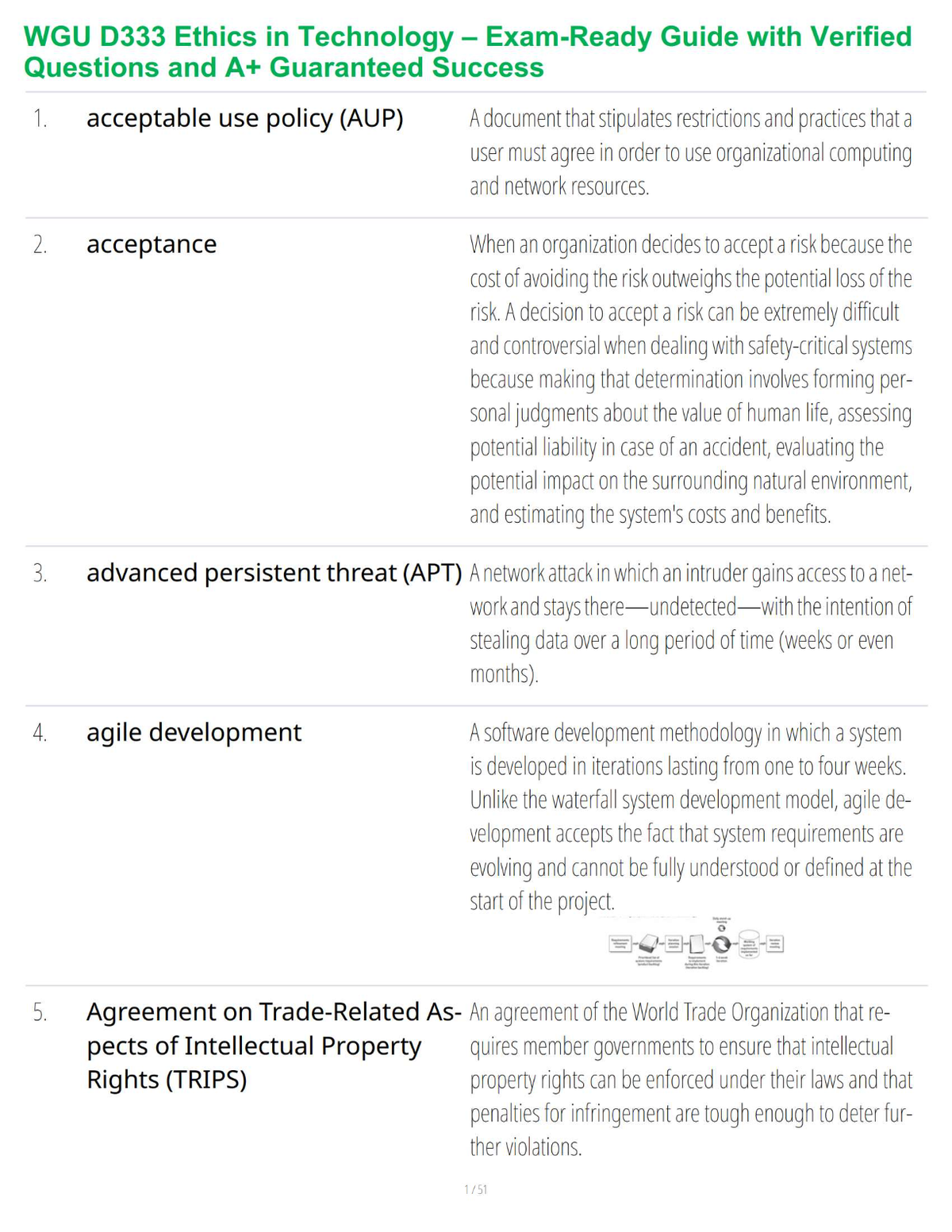
WGU D333 Ethics in Technology – Exam-Ready Guide with Verified Questions and A+ Guaranteed Success
WGU's D333 Ethics in Technology recently transitioned from an Objective Assessment (OA) format to a Performance Assessment (PA) model as of May 2026. To ensure success, students must complete two distinct writing tasks that apply ethical frameworks to real-world technology scenarios.
Core Course Requirements for 2026
- Task 1: Ethical Scenario Analysis. You must select a specific scenario (e.g., AI in hiring, license plate readers, or a data breach) and apply ethical frameworks like Utilitarianism, Deontology, or Virtue Ethics to analyze the situation.
- Task 2: Professional Ethics. This task involves writing a 2–3 page paper focusing on professional codes of ethics (such as the Software Engineering Code of Ethics) and their application in a professional setting.
- Citation Requirement: A critical key to passing on the first attempt is to cite WGU course material after every paragraph, even when using your own words.
Essential Study Topics
- Ethical Frameworks: Deeply understand Utilitarianism (greatest good for the greatest number), Deontology (duty-based), and Virtue Ethics (focus on moral character).
- PAPA Model: Mastery of Privacy, Accuracy, Property, and Accessibility is essential for analyzing data-related ethical issues.
- AI Bias & Fairness: Study the sources of bias in artificial intelligence and the role of ethical guardrails in mitigating risks.
- Legal Standards: Familiarize yourself with key laws, including the Fourth Amendment, H-1B visa regulations, and the Age Discrimination in Employment Act.
Verified Success Resources
- Task Guide: Access the SharePoint "task guide" through the WGU Course Community tab or by contacting your Course Instructor for specific rubric advice.
- Pluralsight Video: Watch the required Pluralsight video on AI Ethics: Understanding Bias and Fairness, as it provides critical context for AI-related tasks.
- Study Materials: Use verified study guides available on platforms like Scholarfriends for summarized module content.